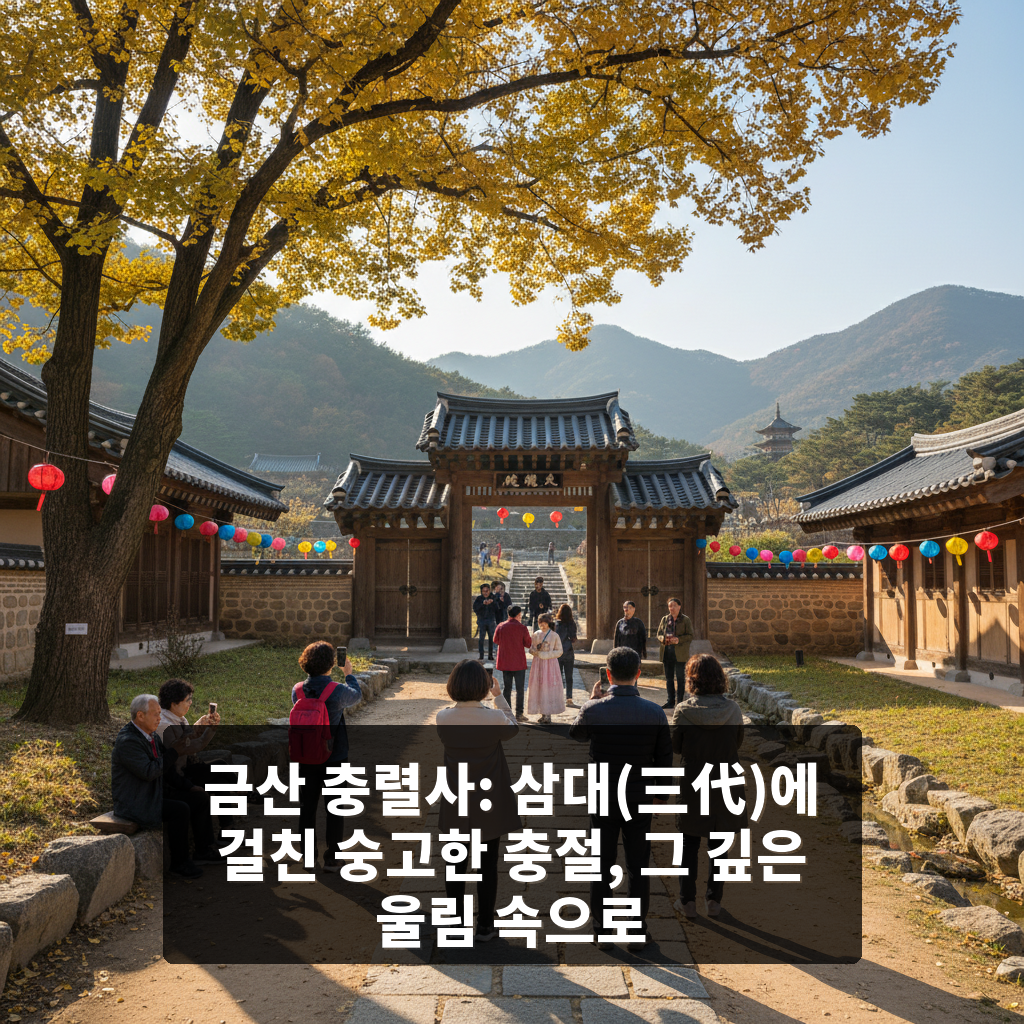
Geumsan Chungnyeolsa: Noble loyalty spanning three generations, into its deep resonance.


Some stories resonate across hundreds of years. What if names that willingly threw themselves into the nation’s crisis, and the noble history they built, were accumulated in one place? Chungnyeolsa (Geumsan), nestled in Geumsan’s tranquil landscape, is precisely the answer to such a question.
This is more than just a shrine; it is a living space where the stories of four loyal subjects who sacrificed their lives for the nation over three generations during the Joseon Dynasty breathe. Their courage and sacrifice continue to inspire us deeply today, and Geumsan Chungnyeolsa serves as a sacred ground where all those stories begin and are remembered.
Noble Spirit Beyond Time: Discovering Geumsan Chungnyeolsa
Chungnyeolsa (Geumsan), serenely located in Nami-myeon, Geumsan-gun, is a historic shrine that fully embodies the spirit of the Haeju O family. It enshrines the spirit tablets of four loyal subjects who dedicated themselves to the nation over three generations: Master Wanwoldang O Eungjeong (1548-1597), his eldest son Wuk, second son Jik, and grandson Bang-eon.
This wooden building, with its humble yet sturdy structure of three bays in the front and two on the sides, was built in 1831 (the 31st year of King Sunjo’s reign) and stands to this day. The tiles and wooden pillars, bearing the marks of time, seem to hold their own stories, offering a solemn sense of awe to visitors.
Names That Protected the Nation: The Shining Record of the O Eungjeong Family


The story of Master O Eungjeong flows alongside the tumultuous history of the mid-Joseon Dynasty. He passed the military examination in the 7th year of King Seonjo’s reign (1574), embarking on a path as a military official, and valiantly defended Suncheon, Jeollado, amidst the fires of the Jeongyujaeran War in the 30th year of King Seonjo’s reign (1597). When Japanese invaders attacked Namwon Fortress that year, he participated in the Battle of Namwon Fortress without an ounce of hesitation, meeting a tragic end by dying in battle. His loyalty did not end there.
The Footprints of Loyal Subjects Across Three Generations
- O Eungjeong: A loyal subject who protected the nation, dying in battle at Namwon Fortress during the Jeongyujaeran War in 1597.
- O Jik: Participating in the conquest of Later Jin in 1619 (11th year of Gwanghaegun’s reign), when Gang Hong-rip surrendered, he charged into the enemy camp on a white horse, cut down numerous enemies, and gloriously committed suicide, demonstrating his unwavering loyalty.
- O Bang-eon: When King Injo surrendered during the Byeongjahoran (Qing Invasion), unable to bear the shame, he threw himself into the river and died for his country, showing unwavering integrity until the very end.
History Preserved by National Spirit During the Japanese Colonial Period
Klook.com

During the Japanese colonial period, Japan’s schemes to obliterate our history extended to Chungnyeolsa (Geumsan). The Japanese police made various attempts to demolish the shrine, but they failed due to the desperate opposition of the local Confucian scholars and the O family clan. This was more than just protecting a building; it was an expression of the strong will to defend our nation’s spirit and historical legitimacy.
Thanks to the steadfast will of these ancestors, Chungnyeolsa has been fully preserved to this day, and every year on the 20th day of the 9th lunar month, a noble ancestral rite is held to honor the four loyal subjects. Standing here, one feels the noble spirit of the ancestors who steadfastly preserved history even amidst the pains of their era.
The Charms of Geumsan Embracing Chungnyeolsa (Geumsan)
If you’ve arrived at Chungnyeolsa (Geumsan), following the traces of history, you can plan an even richer trip by exploring the surrounding Geumsan scenery. Chungnyeolsa is located in a quiet village in Geumsan, making it an excellent place to escape the busy city and reflect on history in tranquility.
Geumsan Attractions to Enjoy Nearby
- Geumsan Ginseng Market: You can experience and purchase the essence of Geumsan ginseng amidst the vibrant market atmosphere.
- Gaesamteo Park: A significant place imbued with the legend of the first discovery of ginseng, where you can get a glimpse into the history and culture of ginseng.
- Maninsan Recreational Forest: Relatively close to Chungnyeolsa, it’s a good place to cleanse your mind and body and relax in nature after a historical exploration.
Tips for Visiting Chungnyeolsa (Geumsan) for Time Travelers
Here are some tips for making your visit to Chungnyeolsa (Geumsan) more meaningful. This is a place imbued with nobility and solemnity rather than splendor, so if you learn about its historical background beforehand, you will be able to feel an even deeper impression.
- Stroll through the grounds with a calm mind: Walk in the footsteps of Joseon Dynasty scholars and feel their spirit. The shrine’s tranquil atmosphere will lead you into deep contemplation.
- Pay attention to the ancestral rite on the 20th day of the 9th lunar month each year: Visiting at this time can be a particularly special experience as you can directly witness the solemn spectacle of the memorial service.
- Connect with nearby Geumsan attractions: After visiting Chungnyeolsa, plan a trip to deeply understand Geumsan’s history and culture by also exploring places like the Geumsan Ginseng Market or Gaesamteo Park.
- Maintain a respectful viewing attitude: Since the shrine is a space commemorating the deceased, it is important to observe it with a reverent and quiet demeanor.
Frequently Asked Questions
Q1. What kind of place is Chungnyeolsa (Geumsan)?
Chungnyeolsa is a shrine located in Geumsan, dedicated to four loyal subjects who sacrificed their lives for the nation over three generations, including the mid-Joseon military official O Eungjeong, his sons O Wuk and O Jik, and his grandson O Bang-eon. It is a place commemorating their noble spirit of sacrifice.
Q2. Who are the main figures enshrined at Chungnyeolsa?
Master Wanwoldang O Eungjeong died in battle at Namwon Fortress during the Jeongyujaeran War, his second son O Jik committed suicide during the conquest of Later Jin, and his grandson O Bang-eon, enraged by King Injo’s surrender during the Byeongjahoran, threw himself into the river and died for his country. These four loyal subjects across three generations are enshrined here.
Q3. When was Chungnyeolsa built?
Chungnyeolsa is a wooden building constructed in 1831 (the 31st year of King Sunjo’s reign). It offers a glimpse into the architectural style of shrines during the late Joseon Dynasty and has stood witness to history for a long time.
Q4. What happened to Chungnyeolsa during the Japanese colonial period?
During the Japanese colonial period, Japanese police attempted to demolish Chungnyeolsa but failed due to strong opposition from local Confucian scholars and the O family clan. This remains a powerful symbol of resistance to protect our nation’s history and spirit.
Q5. Is there a special time to visit Chungnyeolsa (Geumsan)?
An ancestral rite honoring the four loyal subjects is held annually on the 20th day of the 9th lunar month. Visiting at this time allows you to directly experience the solemn and meaningful ritual, deepening your understanding of its historical significance.
 Love Korea? Promote it & Earn.