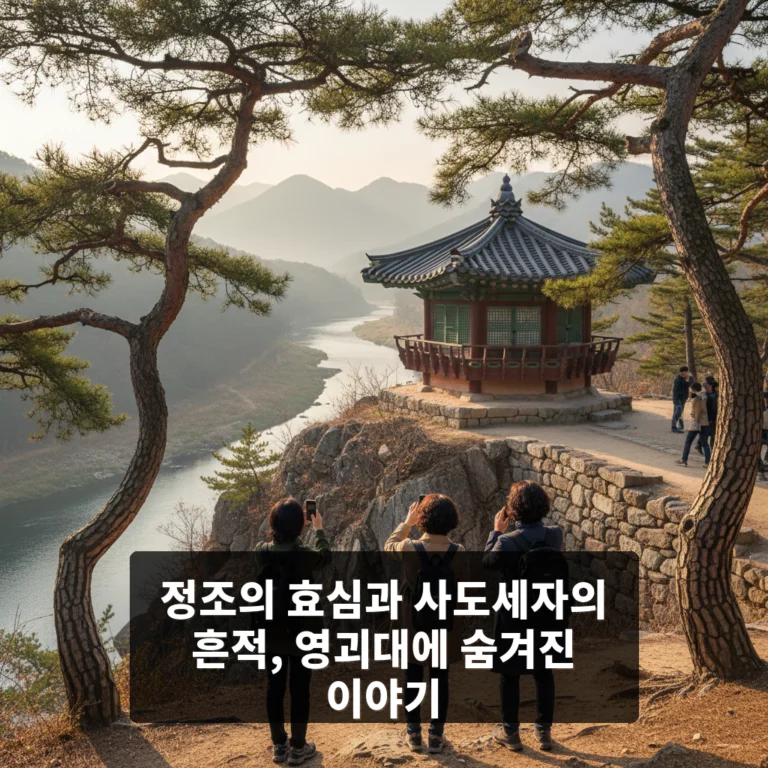
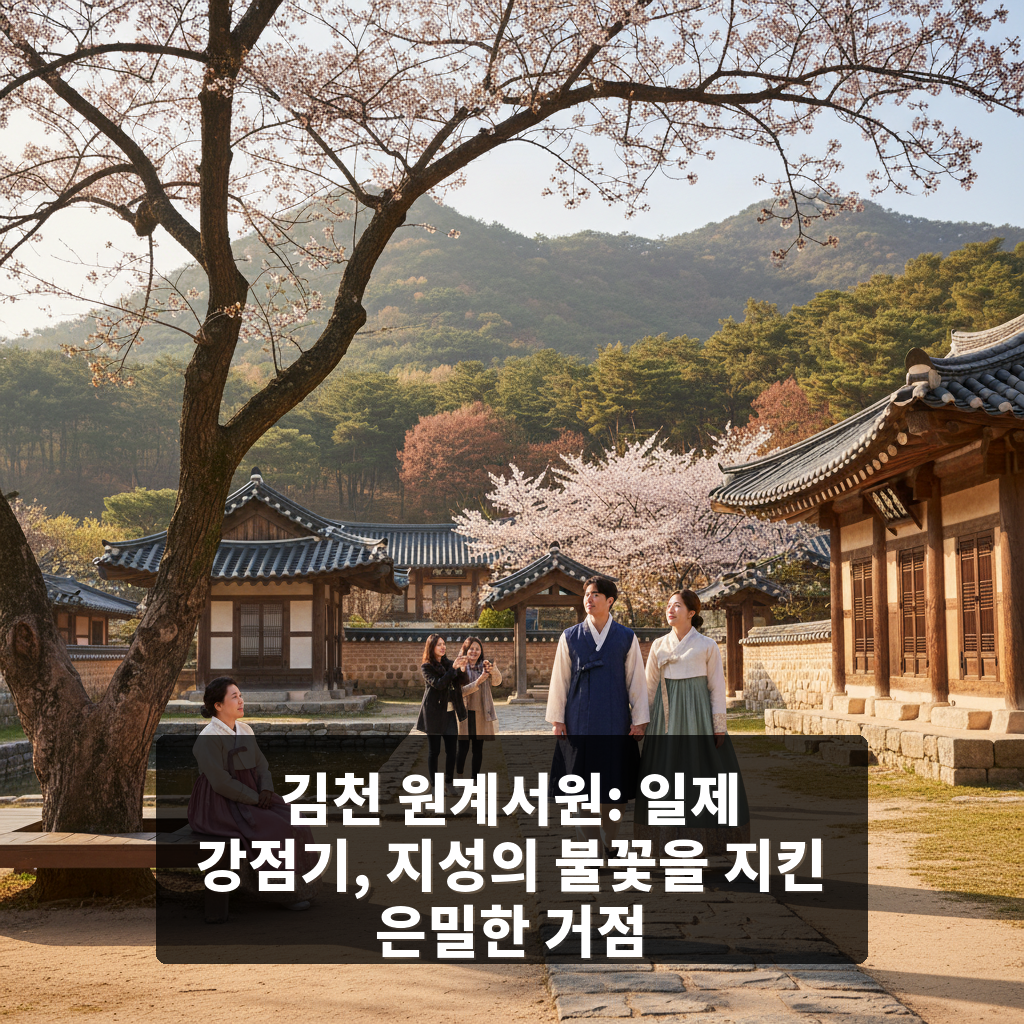
Gimcheon Won’gye Seowon: A secret base that protected the flame of intellect during the Japanese colonial period


Do you know the footsteps of a powerful independence activist, hidden within the winding pages of history? Serenely located on the foothills of Bugok-dong, Gimcheon, Wongyesowon holds the traces of that great spirit. Though it appears to be an ordinary academy on the surface, here, the noble will of the modern Confucian scholar Song Jun-pil, who did not lay down his brush for the future of his homeland amidst the harsh realities of the Japanese colonial period, lives on completely.
After Song Jun-pil, a leading figure in the Paris Declaration Movement, suffered imprisonment, this Wongyesowon’s predecessor, Wongyejeongsa, was where he devoted himself to academic research and nurturing young scholars, living in seclusion to escape Japanese surveillance. Beyond being a mere learning place, it is a historical space that fully embodies the life of the scholar who tried to ignite the spark of hope in a dark era.
This place transcends a simple Confucian academy. From the Japanese colonial period to the present day, it is a living site of history education that played a crucial role in continuing and forming the lineage of modern Confucianism in the Gyeongsang-do region.
The Flame of Intellect, Blossoming in Seclusion
The history of Wongyesowon begins with the passion of Song Jun-pil, an independence activist and modern Confucian scholar. In 1919, he led the ‘Paris Declaration Movement’ and resisted Japanese rule, and after imprisonment, he chose to live in seclusion in Eumji Village, Bugok-dong, Gimcheon, to escape surveillance by the Japanese police.
From 1933, the scholar dedicated himself to academics here, and in 1942, he established ‘Wongyejeongsa’ to nurture young scholars. This academy was an important base that continued the lineage of modern Confucianism in Gyeongsang-do and cultivated talented individuals, even in the darkness of the Japanese colonial period. It was a courageous choice for an intellectual.
Honoring a Noble Will: The Spaces of Wongyesowon
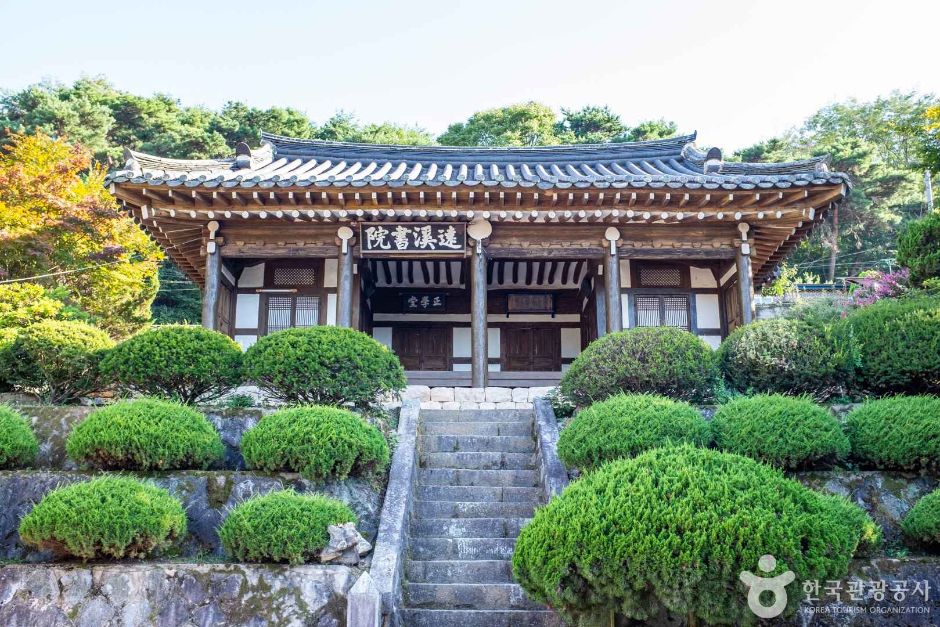
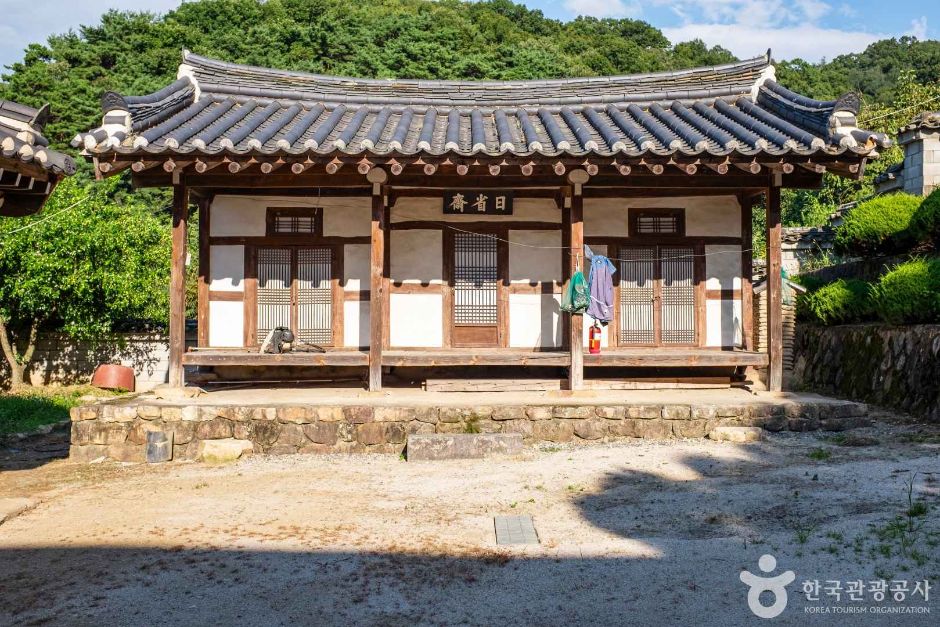
After the passing of Song Jun-pil, his disciples and Confucian scholars established ‘Wongyesowon‘ in 1968 to commemorate his achievements. The spirit of the scholar is enshrined in the name of each building.
Main Buildings of Wongyesowon
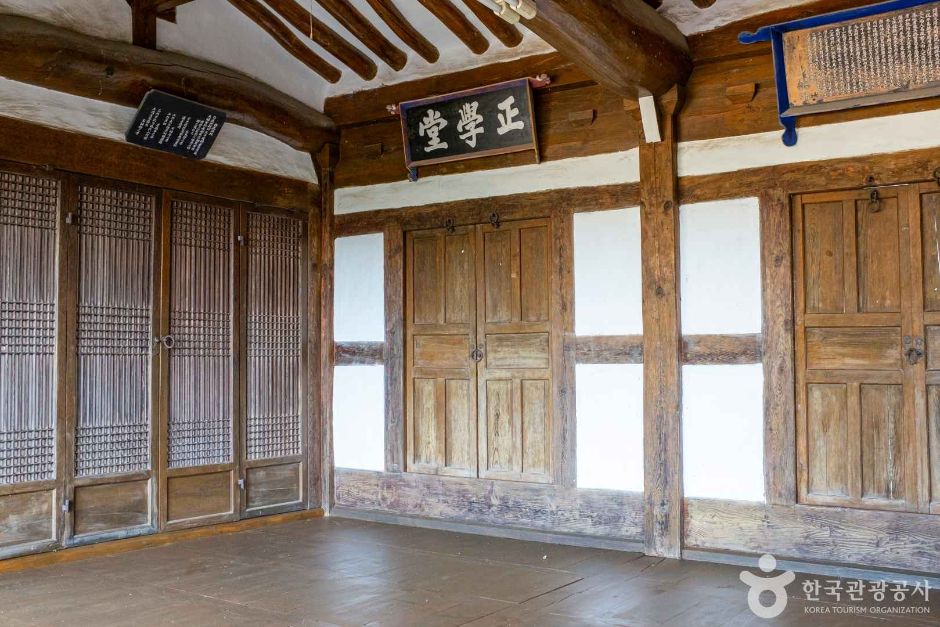
- Jeonghakdang A lecture hall and study space. It embodies the spirit of the scholar who pursued righteous learning.
- Sungdeoksa A shrine built in 1969 on the site of the former Wongyejeongsa. The ancestral tablet of Song Jun-pil was enshrined in 1971. The name plaque is in the autograph of former President Park Chung-hee.
- Ilseongjae Dongjae. It emphasizes the humility of learning, reflecting on oneself and repenting daily.
- Jeyangdang Seojae. It contains the meaning of nurturing talent and benefiting the world by fostering young scholars.
- Jikbangmun Munru. It embodies the wish to approach studies with an upright and righteous heart.
Wongyesowon is not merely an old building, but a monumental space where the intellect, independence spirit, and passion for education of an era are concentrated. As you explore this place, feel the dedication of our ancestors who upheld their righteous spirit during harsh times.
Into Quiet History: Wongyesowon Visitor Information
Klook.com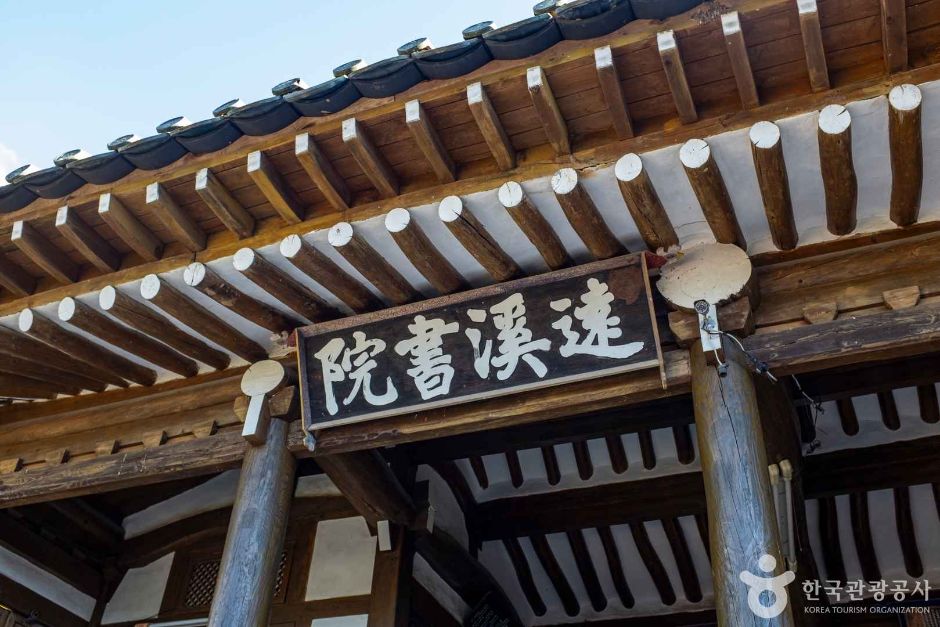
Where is Gimcheon Wongyesowon located?
Wongyesowon is located on the mountainside of Bugok-dong, Gimcheon, Gyeongsangbuk-do. Public transport access is difficult, so we recommend using a private car. Following the tranquil mountain road, you will find a peaceful academy amidst nature.
Before Your Visit, Please Note This!
- Quiet Observation As the academy is a space for study and remembrance, please maintain a reverent and quiet demeanor.
- Explore the Surroundings Enjoy the nature of Gimcheon by walking along the tranquil paths around the academy. A course exploring hidden historical sites together is also recommended.
- Seasonal Charms Experience the charm of the academy, which changes with the seasons, such as spring blossoms and autumn foliage.
Frequently Asked Questions
Q1. Who founded Wongyesowon?
Wongyesowon was founded based on Wongyejeongsa, which was established by Song Jun-pil, an independence activist and modern Confucian scholar, and was built in 1968 by his disciples and Confucian scholars after his passing to commemorate his achievements.
Q2. What is the connection between the Paris Declaration Movement and Wongyesowon?
Song Jun-pil, a leading figure in the Paris Declaration Movement, lived in seclusion in Gimcheon and established Wongyejeongsa after suffering imprisonment. Wongyesowon is a place that inherited the spirit of this very Wongyejeongsa.
Q3. Which buildings are most important to see at Wongyesowon?
Jeonghakdang is important as a lecture space, and Sungdeoksa as a shrine where Song Jun-pil’s ancestral tablet is enshrined. Notably, the name plaque of Sungdeoksa is also noteworthy as it is in the autograph of former President Park Chung-hee.
Q4. What historical significance does Wongyesowon hold?
Wongyesowon is a space that embodies the life and philosophy of Song Jun-pil, who sought to preserve scholarship and national spirit even during the Japanese colonial period. It significantly contributed to the formation and continuation of modern Confucianism in the Gyeongsang-do region.
Q5. Are there any precautions when visiting Wongyesowon?
As the academy is a space for study and remembrance, please maintain a quiet and reverent demeanor. We recommend using a private car rather than public transport, and it is advisable to explore the surrounding natural scenery as well.
 Love Korea? Promote it & Earn.