Seosan Haemieupseong, time travel beneath the fortress walls embracing Joseon’s painful history


Some places transcend mere architecture, becoming grand storytellers that encapsulate hundreds of years of time. On each steadfast wall, hardship, sacrifice, and unyielding faith are etched, unfolding a historical drama that feels alive. Seosan Haemieupseong Fortress, located in Seosan, Chungcheongnam-do, is precisely such a place.
This is not just an old fortress. It is a special place where the breath of the Joseon Dynasty still lives, and painful memories that must not be forgotten remain intact. As you walk through Seosan Haemieupseong Fortress, you will have a mysterious experience, as if going back in time, not only due to its magnificent scale and excellent state of preservation but also its deep historical significance.
In this article, we will explore the tragic narrative hidden within the sturdy stone fortress and the charm of Haemieupseong, which has been reborn as a beautiful resting place today.
Following the Traces of Time: Stories Told by the Walls of Haemieupseong Fortress
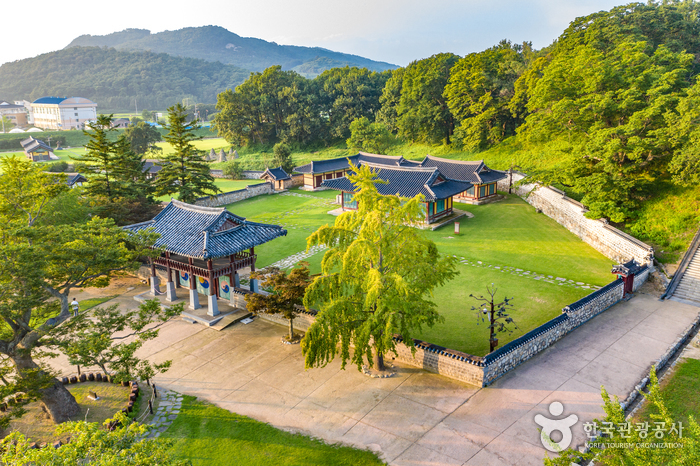
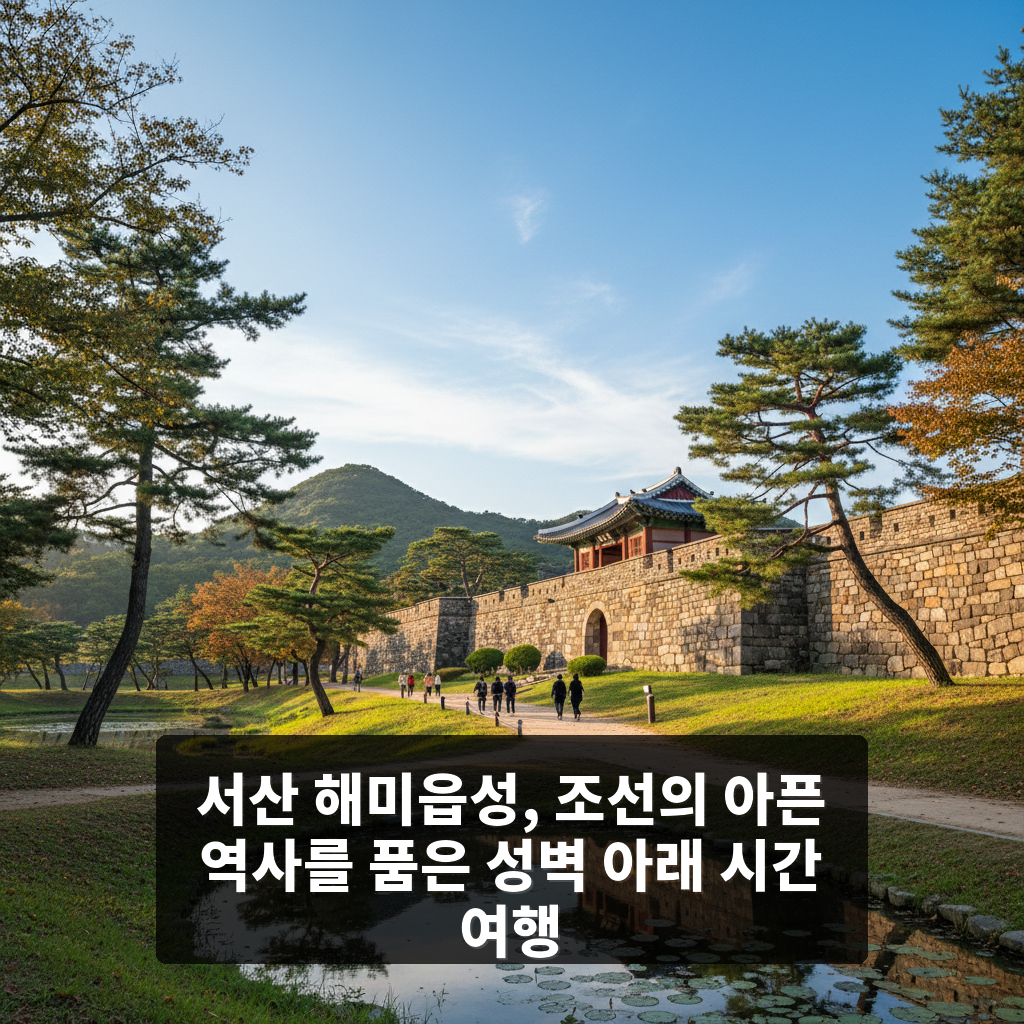
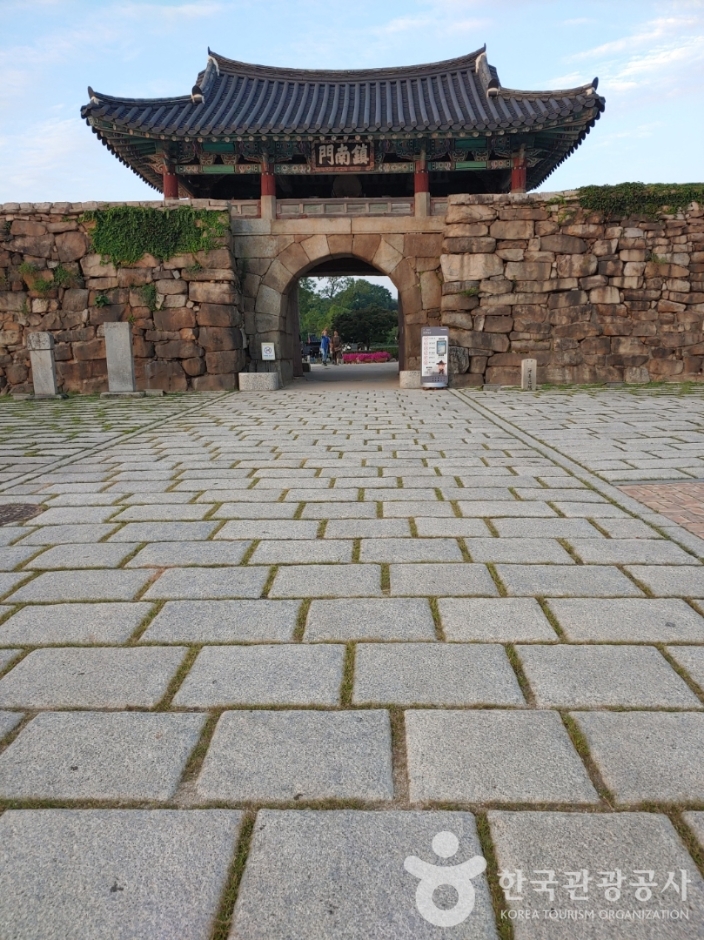
Seosan Haemieupseong Fortress, one of the representative *eupseong* fortresses of the Joseon Dynasty, refers to a flatland fortress built to enclose a town. Along with Gochang Eupseong and Naganeupseong, this place, considered one of Korea’s three major *eupseong* fortresses, is a massive stone fortress completed in the 22nd year of King Seongjong of Joseon, or 1491. Its scale is truly overwhelming, with a circumference of approximately 1.8 km, a height of 5 m, and a total area of 196,381 m² (about 60,000 pyeong), with three gatehouses facing east, south, and west standing firmly.
Although it has weathered the storms of Time for a long time, through recent restoration and purification projects, it has regained its old appearance and been developed into a historic park, offering visitors a breath of history. However, the story of Seosan Haemieupseong Fortress does not merely reside in its sturdy walls. The tragic history of the Catholic Persecution in the late Joseon period is entirely imbued within this place.
The Painful History Held by the Great Stone Fortress: The Site of the Catholic Persecution
During the regency of the Daewongun, Haemieupseong Fortress was one of the central sites of the Catholic Persecution. Numerous believers from various regions of Chungcheongdo were dragged to the government office here and subjected to brutal torture and execution. Particularly during the Byeongin Persecution in 1866, it is said that over 1,000 believers were martyred here, making the entire *eupseong* fortress a holy site of martyrdom preserving the pain of that time.
- The Pain of Martyrdom It is a historical site where, during the Catholic Persecution in the late Joseon period, numerous believers from various regions of Chungcheongdo were brought to Haemieupseong Fortress, where the government office was located, and subjected to torture and death.
- Thousands of Sacrifices Especially during the persecution in 1866, over 1,000 believers were executed here, and their noble faith and sacrifice are imbued throughout the fortress walls.
Haemieupseong Fortress: A Journey Following Its Footsteps
Upon entering Haemieupseong Fortress, you can find various traces that bear witness to the painful history of that time. In the inner fortress square, the site of the prison where Catholic believers arrested during the Daewongun’s regency were confined has been restored, silently revealing the horrors of that period. Next to it stands an old pagoda tree that has endured hundreds of years.
Spaces Imbued with the Breath of History
Vivid Memories of Suffering: The Prison Site and the Pagoda Tree

This pagoda tree is not just any tree. On the branches of this approximately 300-year-old tree, standing at the prison entrance, there remain traces of believers being tied by their hair and hung for torture. Still, wire ropes are embedded in its trunk, as if testifying to that cruel history, making observers solemn. This old pagoda tree is a living testament symbolizing the painful history of Seosan Haemieupseong Fortress.
The Scenery Unfolding Along the Expansive Fortress Wall Path
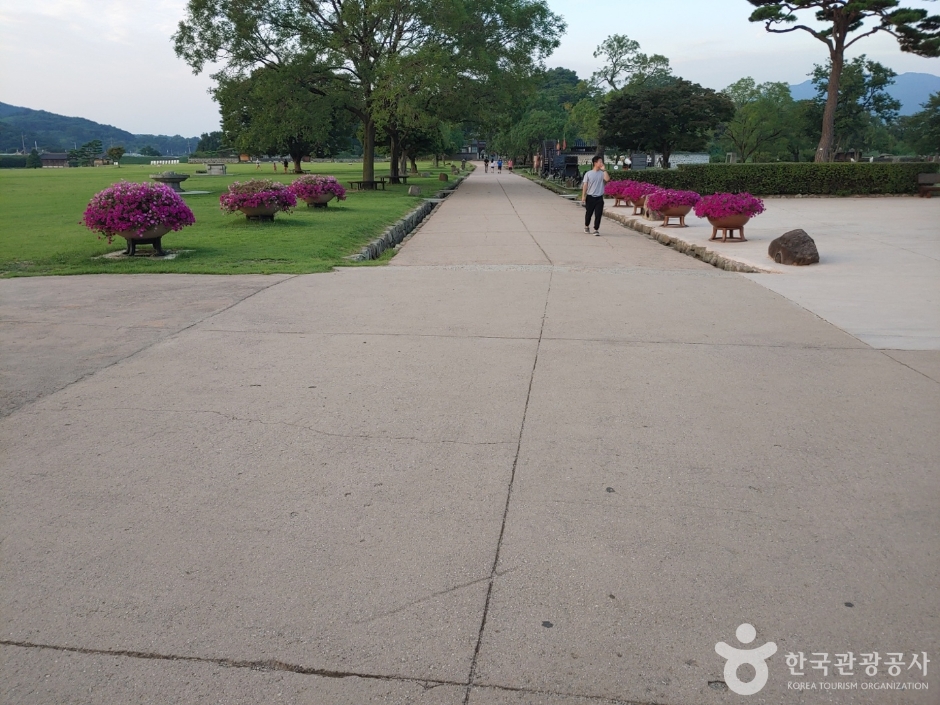
Beyond its tragic history, Haemieupseong Fortress is also a space that offers beautiful scenery and peaceful relaxation. Walking along the well-maintained fortress wall path, you can survey the vast interior of the *eupseong* fortress and the outside scenery. The grandeur of the three gatehouses (east, south, west) and the lawns spread along the fortress walls are also great for family outings or strolls for couples. Especially in the quiet evening, the fortress walls showcase a different kind of charm.
Tips for Visiting Haemieupseong Fortress You Shouldn’t Miss!
- Allow Enough Time To fully enjoy the large scale and various attractions of Seosan Haemieupseong Fortress, it is recommended to allow at least 2 to 3 hours for your visit. Walking around the entire fortress wall is also a great experience.
- Comfortable Shoes Comfortable shoes are essential for walking up and down the fortress wall path or exploring the vast interior of the fortress. Sneakers are the most suitable attire.
- Historical Commentary Listening to the explanations of a cultural tourism commentator, which are offered at scheduled times, can deepen your understanding of Haemieupseong Fortress’s historical background and hidden stories. Please check their operating status before visiting.
- Explore the Surroundings There are many traditional markets and good restaurants around the *eupseong* fortress, so don’t miss the pleasure of filling your hungry stomach or browsing local specialties after your visit.
How to Get to Haemieupseong Fortress, and Nearby Attractions
Seosan Haemieupseong Fortress, where painful history and beautiful scenery coexist, has good accessibility. It is relatively close to downtown Seosan, so you can easily visit by public transportation or car. Especially in spring and autumn, various festivals and events are held, offering even richer sights.
Haemieupseong Fortress Location and Transportation Information
Seosan Haemieupseong Fortress is located in Haemi-myeon, Seosan-si. If you use a car, you can easily find it by searching for ‘Haemieupseong’ on your navigation system, and ample parking space is provided. City buses also run from downtown Seosan towards Haemieupseong Fortress, so public transportation users can easily visit.
Places Worth Visiting Near Haemieupseong Fortress
- Haemi Martyrdom Holy Site It is located right next to the *eupseong* fortress and is a meaningful space that continues the history of the Catholic Persecution. You can visit together to reflect on the meaning of history.
- Seosan Dongbu Market If you want to experience the vibrant atmosphere of a traditional market, we recommend Seosan Dongbu Market. You can find fresh seafood and local specialties.
- Gaesimsa Temple It is a tranquil temple nestled in beautiful nature, where double cherry blossoms create a magnificent spectacle, especially in spring. It is not far from Haemieupseong Fortress by car.
- Ganworam Hermitage It is a mysterious hermitage that appears to float on the sea, and visiting it at low tide offers an even more special view. It is excellent for enjoying the beauty of the West Sea.
Beyond the Walls: Seosan Haemieupseong Fortress, Speaking of Hope
Seosan Haemieupseong Fortress is not just a historical site. It is a space imbued with both the grandeur of an *eupseong* fortress that has endured over 500 years and the pain of those who sacrificed everything for their faith. The sturdy fortress walls, once a barrier of tragedy, have today become a place of hope for remembering history and learning for the future.
Walking here will be a meaningful experience that goes beyond simply appreciating the scenery, confronting the lives and spirits of our ancestors. How about embarking on a special time travel where past and present intersect at Seosan Haemieupseong Fortress? We hope you gain your own deep inspiration and insights there.
Frequently Asked Questions
Q1. What is the estimated time required to tour Seosan Haemieupseong Fortress?
Seosan Haemieupseong Fortress is large in scale and offers various attractions, so it is advisable to allow at least 2 to 3 hours to explore it leisurely. It is good to allow ample time to walk around the fortress walls and visit the prison site, pagoda tree, traditional houses, and other features inside.
Q2. What are the parking facilities like at Haemieupseong Fortress?
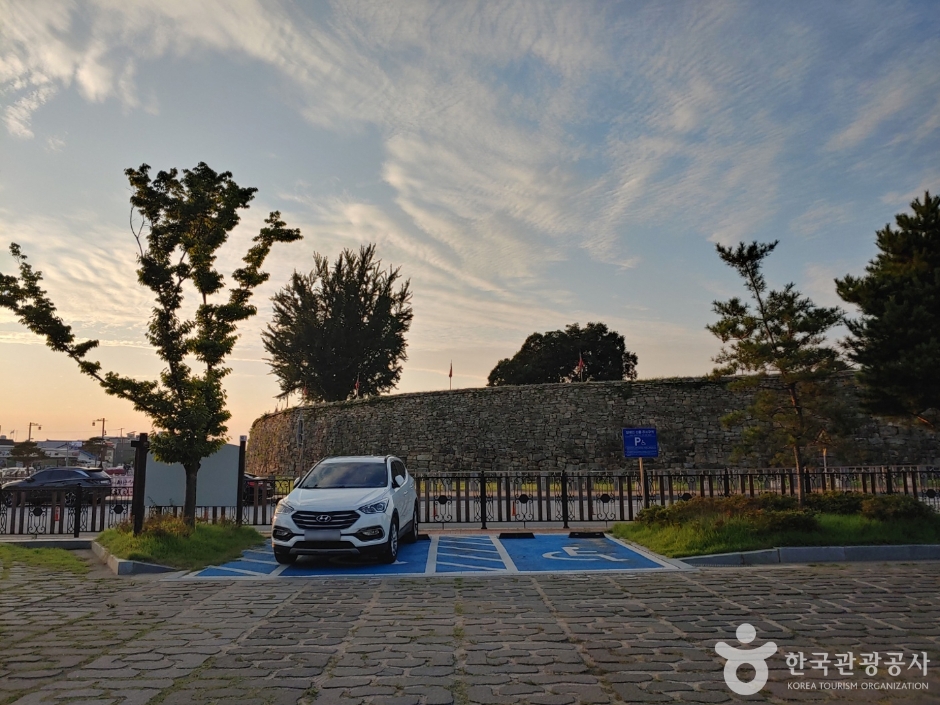
Yes, ample and convenient parking spaces are well-provided around the entrance of Haemieupseong Fortress. Visitors using their own cars can use it comfortably without worrying about parking. Parking is free of charge.
Q3. Can I see relics related to the Catholic Persecution at Haemieupseong Fortress?
Yes. Seosan Haemieupseong Fortress is a representative holy site of martyrdom from the Catholic Persecution in the late Joseon period. In the inner fortress square, the prison site where Catholic believers were tortured and confined at that time has been restored, and you can also directly see the old pagoda tree where brutal tortures took place. We recommend visiting Haemi Martyrdom Holy Site, which is right next to the *eupseong* fortress.
Q4. Is it good for visiting with children?
Haemieupseong Fortress is an excellent place to visit with children. The wide lawns and well-maintained fortress wall path are great for children to play, and they can learn history in a fun way through traditional costume experiences or various folk games experience programs (check availability). As a place of deep historical significance, it can provide an educational experience for children.
Q5. Are there other tourist attractions or good restaurants near Haemieupseong Fortress?
There are many attractive places worth visiting around Haemieupseong Fortress. Haemi Martyrdom Holy Site is nearby, and you can taste local specialties and food at Seosan Dongbu Market. If you travel a little further, you can also visit the beautiful Gaesimsa Temple or the mysterious Ganworam Hermitage on the sea. We also recommend enjoying Seosan’s local cuisine at the restaurant area around the *eupseong* fortress.