
Tragedy hidden in silence, the passionate history of Gimpo Munsusanseong Fortress


Some mountains are not just part of the landscape. The breath of centuries ago permeates every winding ridge, and the traces of a tragic history are embedded even in a nameless rock. What stories does this quiet mountain fortress truly hold? Below a landscape unfolding like a classical painting, where moments of history as grand as immense waves are completely sealed, lies Gimpo Munsusanseong Fortress.
Munsusanseong Fortress, which steadfastly guarded the entrance to Ganghwado Island and protected the western sky of Joseon, is more than just a historical site. It is a fierce battlefield where the blood and sweat of nameless warriors desperately defended their homeland against the bombardment of the French fleet from a foreign land in 1866, and a historical scene where Joseon’s pride shone even amidst an inferiority of weapons. Let us now follow its footsteps.
Guarding Hanyang from Ganghwa’s Gateway: The Beginning of Gimpo Munsusanseong Fortress
Munsusan, a crucial passage connecting Ganghwado Island and the mainland, has been a strategic stronghold since ancient times. In particular, Gimpo Munsusanseong Fortress was a key axis of Ganghwado Island’s defense during the Joseon Dynasty, playing a leading role in preventing naval invasions along with Gapgotjin. The fortress is an architectural structure imbued with the desire to protect the nation against foreign invasions. Having experienced the Imjin War and the Byeongja Horan, Joseon keenly realized the importance of defending the capital through the West Sea, and especially since Ganghwado Island was the gateway to Hanyang, the role of the fortress in protecting this area was immense.
Why was a mountain fortress built here?
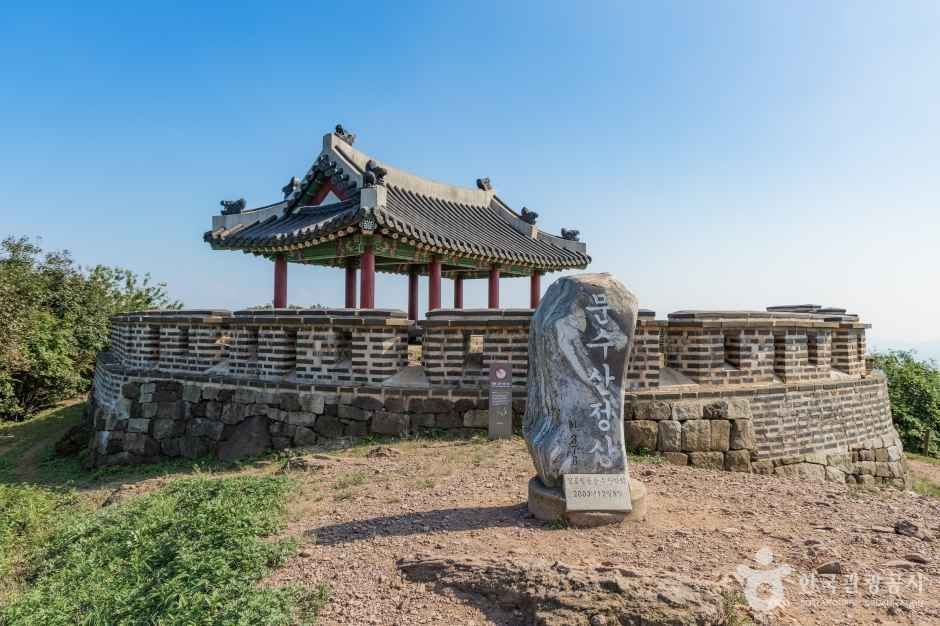

Munsusanseong Fortress, first constructed in 1694 during King Sukjong’s reign, was later rebuilt in 1812, becoming an even more robust defensive facility. This was not just a simple wall, but a desperate effort for the nation’s security. Thanks to its geographical advantage, Munsusan could survey the Ganghwa Strait at a glance, which played a crucial role in understanding the movements of invading forces.
- Construction Period First built in 1694 (20th year of King Sukjong)
- Reconstruction Period Major renovation in 1812 (12th year of King Sunjo)
- Main Function Serving as the frontline defense for the entrance of Ganghwado Island and the inland.
- Characteristics A robust stone-stacked mountain fortress, a key stronghold for defending Hanyang during foreign invasions.
Gimpo Munsusanseong Fortress Blocking the French Army, Fierce Records of the Byeonginyangyo
In 1866, Joseon faced an unfamiliar threat from Western powers. When the French forces led by Admiral Roze occupied Ganghwado Island under the pretext of the Byeongin Persecution, Han Seong-geun was hastily appointed as Sunmu Chogwan to prevent their inland infiltration, and the defense of Gimpo Munsusanseong Fortress was strengthened. Here, Joseon’s soldiers engaged in their first historical confrontation.
What are the records of resistance that shone even amidst an inferiority of weapons?


In October of the same year, about 70 French soldiers crossed the sea towards Munsusanseong Fortress. Facing an enemy with overwhelming firepower, the Joseon forces bravely resisted. In this battle, the Joseon forces achieved the feat of killing 3 French soldiers and injuring 2 others. Although they could no longer hold out due to the inferiority of their weapons and eventually had to retreat, this battle holds significant meaning. Although recorded as a defeat, it is a historical scene that shows the resistance spirit of the Joseon forces, as it delivered the first meaningful blow to the French army.
- French Occupation of Ganghwado Island French forces led by Admiral Roze invaded Ganghwado Island under the pretext of the Byeongin Persecution, attempting inland infiltration.
- Strengthening of Munsusanseong Fortress Defense Han Seong-geun was appointed as Sunmu Chogwan, ordered to prevent the French army’s inland entry.
- October Battle Erupts About 70 French soldiers crossed the sea to attack Munsusanseong Fortress.
- Joseon Forces’ Achievement 3 French soldiers killed, 2 injured.
- Munsusanseong Fortress Retreat The Joseon forces could no longer hold out due to weapon inferiority and retreated.
- Destruction of Walls and Withdrawal French forces destroyed Munsusanseong Fortress’s South Gate, its walls, and about 30 civilian homes, then withdrew to Ganghwado Island.
- Historical Significance Although it was a defeat, it is recorded as an important battle demonstrating the Joseon forces’ spirit of resistance, as it inflicted the first significant blow to the French army.
Wisdom Built on Stone, Exploring the Robust Architectural Beauty of Munsusanseong Fortress
Having steadfastly maintained its position amidst the tumultuous waves of history, Gimpo Munsusanseong Fortress itself showcases the excellent fortification technology of the Joseon era. First constructed in 1694, it was extensively rebuilt in 1812, becoming even more robust. Beyond simply stacking stones, it embodies the wisdom of our ancestors who meticulously considered strategic terrain and defensive capabilities.
A Glimpse into the Fortification Techniques Hidden Behind the Robustness
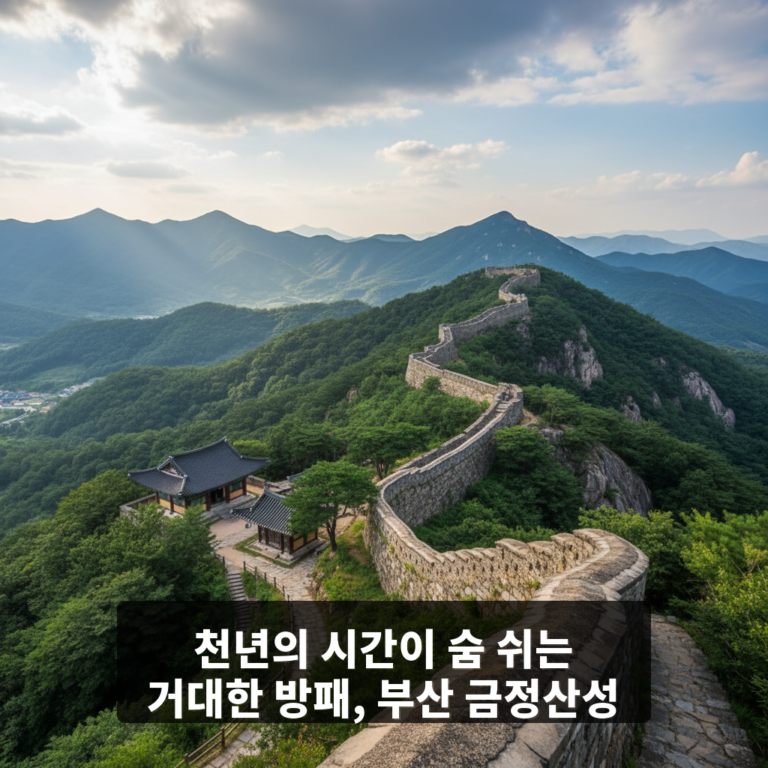
Munsusanseong Fortress is a stone-stacked mountain fortress, meticulously built with well-hewn stones. On top of the fortress walls, defensive structures called ‘yeojang’ were built, designed to allow soldiers to hide and attack the enemy. Although such meticulous construction might have been insufficient to stop the firepower of Western powers at the time, it represented the culmination of Joseon’s best technology. The walls, constructed along the steep mountainous terrain, maximized the use of natural topography to make enemy infiltration difficult, showcasing a typical characteristic of mountain fortress construction during the Joseon Dynasty.
| Category | Content |
|---|---|
| Construction Method | Stone-stacked mountain fortress built with meticulously hewn stones |
| Main Defensive Facilities | Defensive ‘yeojang’ (structure for hiding) |
| Construction Period | 1694 (First construction), 1812 (Reconstruction) |
| Features | Robust defense system utilizing terrain and strategic location |
Where Past and Present Coexist: How to Get to Gimpo Munsusanseong Fortress & Nearby Attractions
Walking directly through the site of forgotten history is a special experience. Gimpo Munsusanseong Fortress is currently popular as a trekking course, transforming into an attractive space where past and present coexist. Its accessibility is also good. Not far from the city center, it is popular as a one-day historical exploration course.
Places to Visit Together, Where Your Footsteps Lead in Munsusanseong Fortress?
After trekking the fortress, you can enjoy a richer trip by visiting other attractions in Gimpo and Ganghwado Island. There are various options to follow the scent of history or to relax in nature.
- Ganghwa Gapgotjindae Fortress A key defensive facility that guarded the entrance to Ganghwa along with Munsusanseong Fortress, sharing a history as a battleground during the Byeonginyangyo.
- Ganghwa History Museum A place where you can see the deep history of Ganghwado Island at a glance, greatly helping to understand the historical context behind Munsusanseong Fortress.
- Aegibong Peace Eco-Park The closest point to North Korea, where you can feel the reality of division and enjoy the beautiful sunset over the West Sea.
- Munsusan Forest Bathing Area A forest bathing area located below the fortress, perfect for enjoying phytoncides while walking along tranquil forest paths.
Footprints of History Not to Be Forgotten, Tips for a Wise Exploration
When visiting Gimpo Munsusanseong Fortress, where the breath of history lives on, knowing a few tips can make your time even more meaningful. Prepare for a trip that protects this important historical site and, at the same time, deeply inspires you.
- Wear Comfortable Shoes The trails along the fortress walls can be somewhat steep, so it’s advisable to prepare shoes suitable for trekking. This is essential for a safe and enjoyable hike.
- Seasonal Preparations Pack seasonal items such as fine dust masks in spring and autumn, sunscreen and insect repellent in summer, and winter gear and thermoses in winter.
- Prior Historical Study Learning about the Byeonginyangyo and the role of Munsusanseong Fortress beforehand will double your emotion and understanding at the site. Searching for related information on your smartphone while exploring is also a good method.
- Take Your Trash Back To protect precious nature and history, you must take your trash back. It is important to keep the area clean for the next visitors without damaging nature.
- Combine with Nearby Attractions Planning your itinerary with other historical sites and tourist attractions in Ganghwado Island or Gimpo will make for a more fulfilling trip. Try various historical experiences on a one-day or two-day course.
Gimpo Munsusanseong Fortress is not merely the remnants of an old fortress wall, but a record of the day when small boats desperately fought against the gigantic waves of history. What we encounter here is not the scars of defeat, but the tenacious spirit of our ancestors who never yielded even in crisis. As you remember their courage embedded in every step, we hope you will deeply engrave the message this noble heritage conveys to us. Listen closely to their voices, seemingly echoing above the quietly flowing waters of the West Sea.
Frequently Asked Questions
Q1. Is there an admission fee for Gimpo Munsusanseong Fortress?
No, Gimpo Munsusanseong Fortress is currently open to the public free of charge, so anyone can freely visit and explore this historical space. There may be a separate parking fee.
Q2. How long are the Munsusanseong Fortress trekking courses?
Munsusanseong Fortress offers various trekking courses along its walls, which total 6km in length. You can choose courses ranging from a short 1 hour to over 3 hours, depending on your physical fitness.
Q3. How did the Byeonginyangyo unfold at Munsusanseong Fortress?
In 1866, when the French forces occupied Ganghwado Island, the Joseon forces engaged in a fierce battle with about 70 French soldiers at Munsusanseong Fortress. The Joseon forces achieved the feat of inflicting casualties on the French, but it was a battle where they ultimately retreated due to weapon inferiority.
Q4. Are there places to eat around Munsusanseong Fortress?
There are various restaurants in the Gimpo area around Munsusanseong Fortress. Especially being close to Ganghwado Island, you can find restaurants offering local specialties such as baendaengi-hoemuchim (spotted sardine sashimi salad) and Ganghwa yakssuk hanu (Ganghwa mugwort-fed Korean beef).
Q5. What is the best season to visit?
Warm and cool spring (April-May) and autumn (September-October) are the best for trekking Munsusanseong Fortress. Especially in autumn, the beautiful fall foliage allows for an even more atmospheric scenery.