The Legend of a Thousand Chickens, a mysterious time encountered at Gimcheon Gerimsa


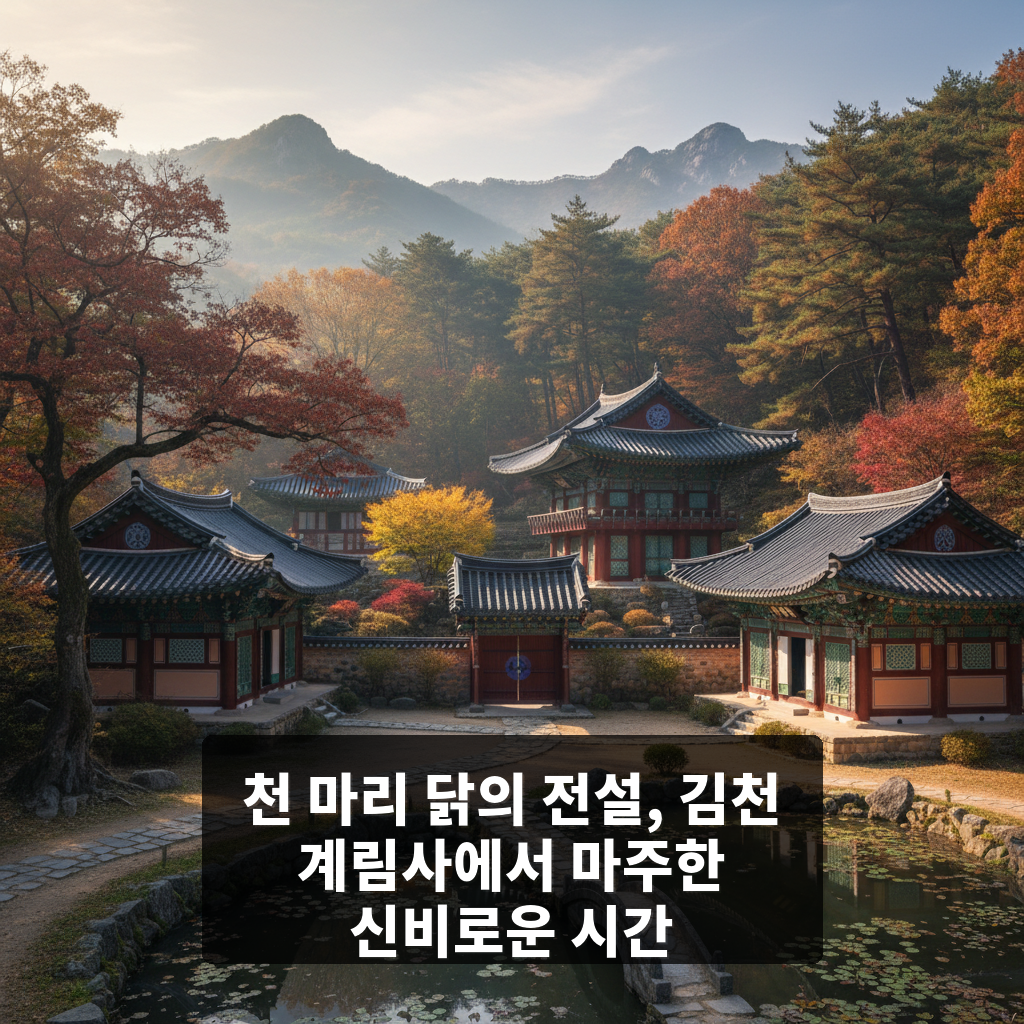
A name that sparks imagination, Gerimsa (Gimcheon). What stories are hidden within this serene temple? Nestled deep in the mountains of Gimcheon, Gyeongbuk, this place is not just a temple, but a special space where feng shui, a thousand chickens, and fervent wishes are intertwined.
From the founding legend passed down since the Silla Dynasty to the mysterious power of the Gwaebultaeghwa that appeased droughts, Gerimsa is a place where stories transcend time and breathe life. If you wish to feel the breath of history in tranquility, prepare to quietly open the doors of Gerimsa, Gimcheon, with me now.
A legend nestled in the mountain terrain, the secret of Gerimsa’s name
The name of Gerimsa (Gimcheon) originated from an unusual legend. In the 3rd year of King Nulji of Silla, when Master Ado passed by this place, he foresaw that due to the fierce mountain terrain according to feng shui, unfavorable incidents would be ceaseless. The master instructed the villagers to build a temple and raise a thousand chickens to prevent murder.
So, the villagers built a temple in the place the master indicated and raised chickens, but the chickens they raised kept dying. Eventually, instead of giving up raising chickens, the villagers changed the temple’s name to Gerimsa (鷄林寺) by using the characters Gye (鷄) for chicken and Rim (林) for forest. It is said that after this, all misfortunes ceased.
What other meaning does the ‘Chicken Forest’ hold?


- Mysterious Forest The word Gerim (鷄林) implies a deeper meaning of ‘mysterious forest’ in addition to its superficial meaning of ‘chicken forest’. This symbolizes the temple’s role in controlling harsh energies and bringing peace.
- Prevention and Healing Master Ado’s wisdom was not simply to raise chickens, but contained the profound intention of controlling the energies of the rugged terrain to protect the peace of the village. Thus, even a single name embodies the wisdom and aspirations of the past.
A millennium of time, the quietly shining traces of Buddhist devotion
Gerimsa (Gimcheon) is a historic temple said to have been founded by Master Ado in the 3rd year of King Nulji of Silla (419 AD). However, records from its founding until the late Joseon Dynasty are not extant, so many stories are lost to time. Later, in 1832, Seongeil Monk rebuilt it, and in 1922, Chundam Monk reconstructed it, leading to its present state.
Currently, Gerimsa retains simple yet refined buildings such as Daeungjeon, the main worship hall, Eunghyanggak, Chilseonggak, and Yosa, adding to its tranquil atmosphere. Among these buildings, one can discover traces of Buddhist devotion that have endured for a millennium.
Quietly shining artifacts, evidence of faith


- Rock-Carved Seated Vairocana Buddha The Buddha statue carved into the rock steadfastly holds its place despite weathering wind and rain over a long period, wearing a benevolent smile as if sharing the suffering of all sentient beings.
- Large Gwaebultaeghwa This mysterious Gwaebultaeghwa, whose creator and date of creation are unknown, held special meaning for the old villagers. When droughts were severe, it is said that they enshrined it by the Ssangsaemga (Twin Springs) at the village entrance and performed rain rituals, earnestly praying for rain. This Gwaebultaeghwa transcends a mere work of art, showcasing the depth of faith that was intertwined with the lives of the common people.
Gimcheon Gerimsa, how to get there?
Gerimsa is serenely situated on the foothills of Unsu-ri, Daehang-myeon, Gimcheon-si. Public transportation access is not easy, so using a private car is recommended. Ample parking space is provided for convenient use.
Tips for Visitors
- Connecting with Nearby Tourist Attractions Near Gerimsa, there are various attractions such as Jikjisa Temple and the Gimcheon World Ceramic Museum. Explore them together to experience Gimcheon’s history and culture more deeply.
- Maintain Tranquility Temples are spaces for prayer and practice. It is advisable to maintain a quiet and respectful demeanor for other visitors.
- Dress Preparation As it is located in a mountainous area, it is recommended to wear comfortable and neat attire suitable for the season, and comfortable walking shoes.
- Check Opening Hours Visitors can usually visit freely from sunrise to sunset, but access to some areas may be restricted during special events or Dharma services, so it is advisable to check in advance. Admission is free.
Enlightenment at Gerimsa, where past and present coexist
Gimcheon Gerimsa is more than just a cultural heritage site; it is a special place where one can simultaneously feel the unique legend associated with its name and the depth of its history. In this place imbued with Master Ado’s wisdom and the fervent wishes of the villagers, we witness moments where the past and present quietly converse.
Pause for a moment in front of the tranquil Daeungjeon or the mysterious Gwaebultaeghwa, and take time to reflect on yourself. The message of peace conveyed by the legend of a thousand chickens will resonate in your heart within this quiet mountain temple.
Frequently Asked Questions
Q1. How did Gerimsa (Gimcheon) get its name?
During the Silla Dynasty, Master Ado advised raising a thousand chickens, fearing that misfortunes would arise due to the rugged mountain terrain. However, as the chickens died, they gave up raising them and changed the temple’s name entirely to Gerimsa (鷄林寺).
Q2. What are the main artifacts at Gerimsa?
Gerimsa preserves the Rock-Carved Seated Vairocana Buddha, which bears traces of long history, and a large Gwaebultaeghwa that was used for rain rituals during droughts.
Q3. When was Gerimsa founded and by whom was it rebuilt?
Gerimsa is said to have been founded by Master Ado in the 3rd year of King Nulji of Silla (419 AD), and was rebuilt and reconstructed by Seongeil Monk in 1832 during the late Joseon Dynasty and by Chundam Monk in 1922, leading to its present state.
Q4. Are there any nearby places to visit along with Gerimsa?
Yes, near Gerimsa, there are various cultural heritage sites and attractions such as the thousand-year-old Jikjisa Temple and the Gimcheon World Ceramic Museum, making it good to plan a trip together.
Q5. Are there any special precautions to take when visiting Gerimsa?
As a temple is a sacred space, it is important to maintain a quiet and respectful demeanor. Also, since it is located in Mountainous region, it is advisable to wear comfortable clothing and shoes when visiting. Admission is free.