Forgotten Name, Revived Millennium-Old History: Walking through Pyeongchang Suhang-ni Temple Site


A place that for a long time was simply called ‘Suhang-ri Temple Site’ and lay dormant in the forest. Not many would know the surprising fact that this place actually held the traces of a mysterious ancient temple, Sudasa. The moment Riddle was revealed, the tranquil forest of Pyeongchang, Gangwon-do, transformed into a stage for vivid stories.
Now, we are about to embark on a journey to Pyeongchang Suhang-ri Temple Site to uncover its hidden past. From the footsteps of monks recorded in Samguk Yusa to the scars of the Korean War, every fragment encountered here is a piece of forgotten history and a profound resonance that speaks to us. What secrets truly lie dormant here?
Forgotten Name, Recovered History: The Secret of Pyeongchang Suhang-ri Temple Site
It is surprising that this place was long known only as ‘Suhang-ri Temple Site’ and concealed its true identity. However, in 1983, everything changed with the excavation of artifacts such as the 〈Taebaekgok Sudasa (太伯谷水多事)〉. Finally, it was clearly revealed that this place was Sudasa Temple Site (水多寺址), the mysterious temple recorded in .
What are the hidden times of Sudasa in historical records?
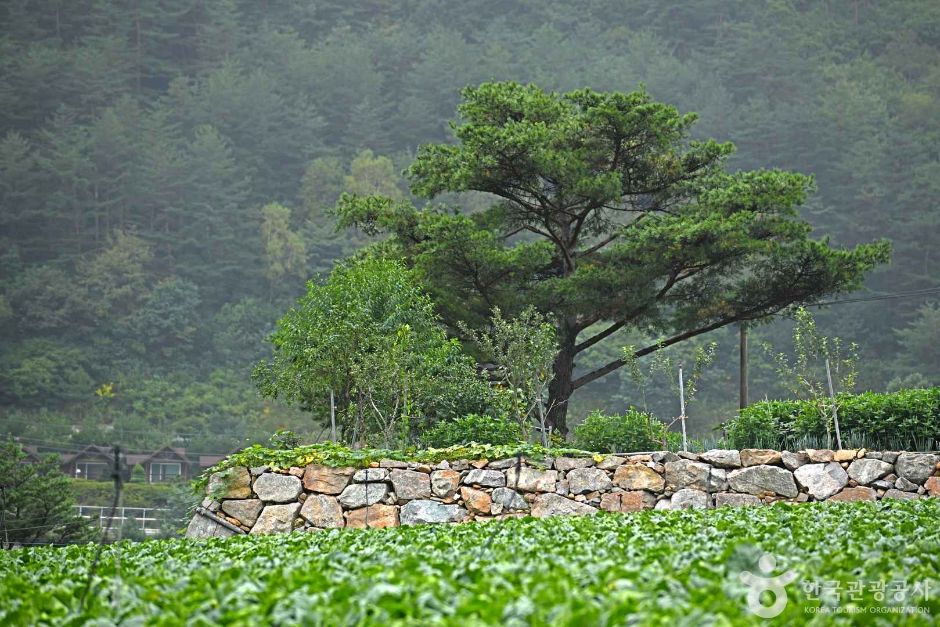
Records of Sudasa can also be found in historical documents. Its existence is clearly evident until the 2nd year of King Danjong of Joseon (1432), when was completed, but unfortunately, no further records are found from onwards. From this, it is presumed that Sudasa was a temple that maintained its lineage until approximately the 15th century. Feel the traces of its history, which must have continued for nearly a millennium, directly at Pyeongchang Suhang-ri Temple Site.
Witnesses of History: Artifacts Remaining at Pyeongchang Suhang-ri Temple Site
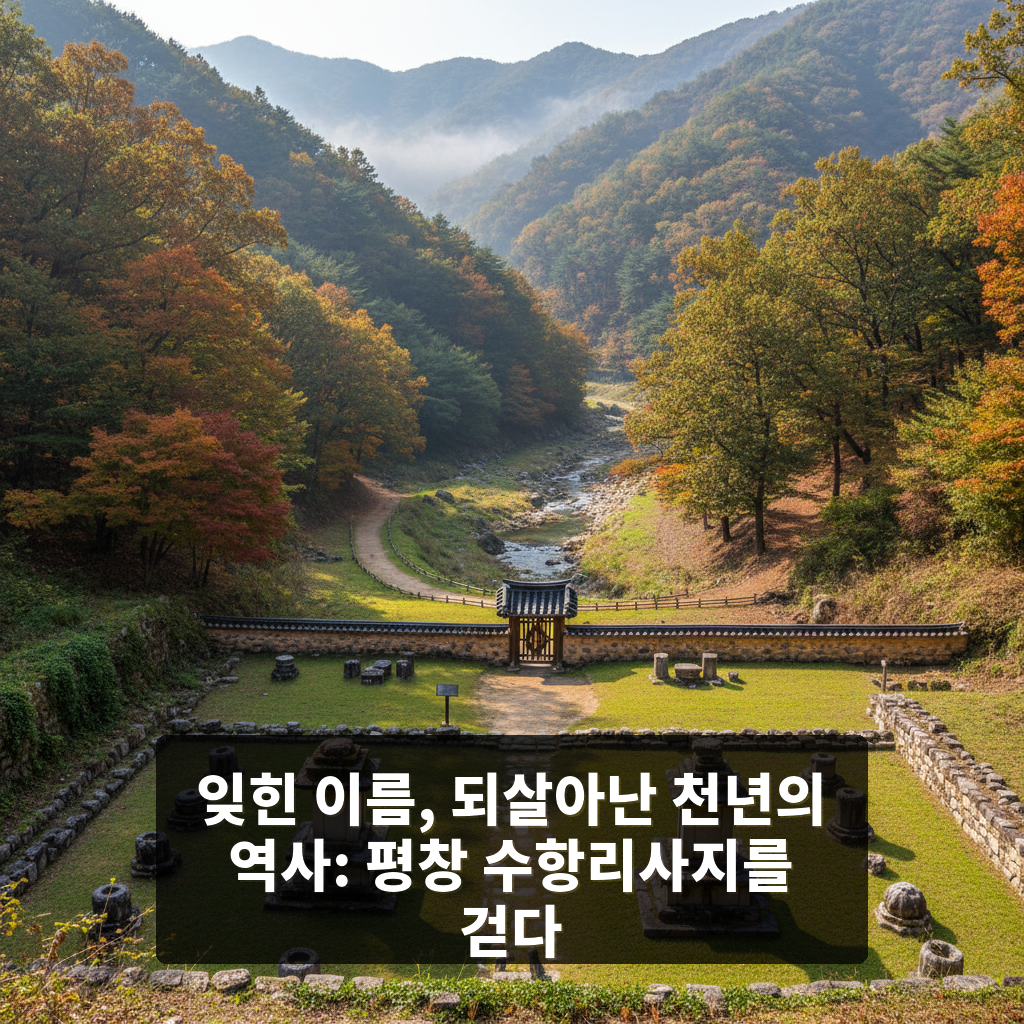
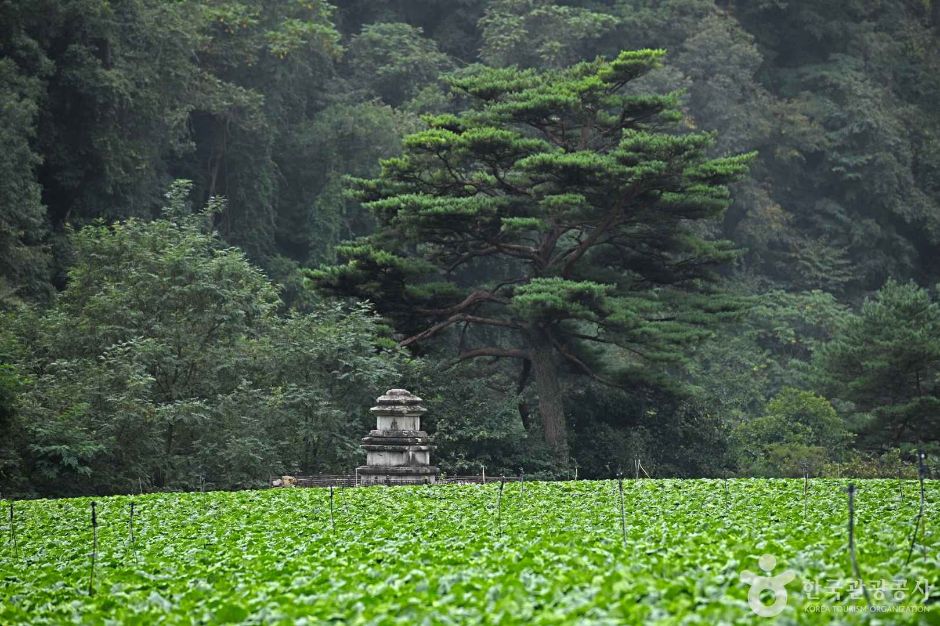
The relics that have endured the ravages of time and remain to this day allow us to vaguely imagine the grand appearance of Sudasa at that time. Currently, only one stone pagoda, partially missing its components so its complete original form is unknown, and the cornerstones of a building site remain here. They seem to be conveying stories of the past in silence.
The Korean War, and the Story of a Revived Pagoda
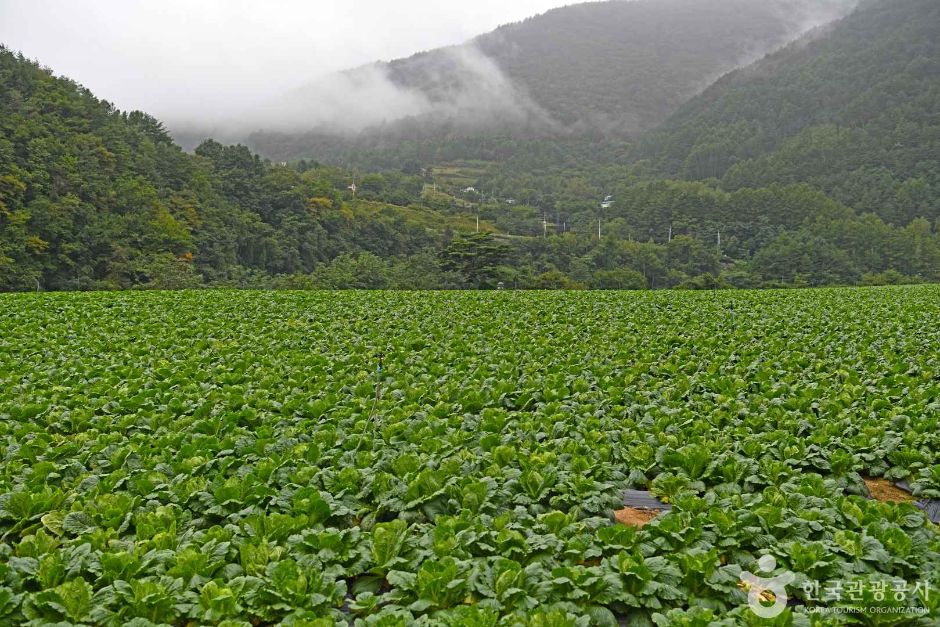
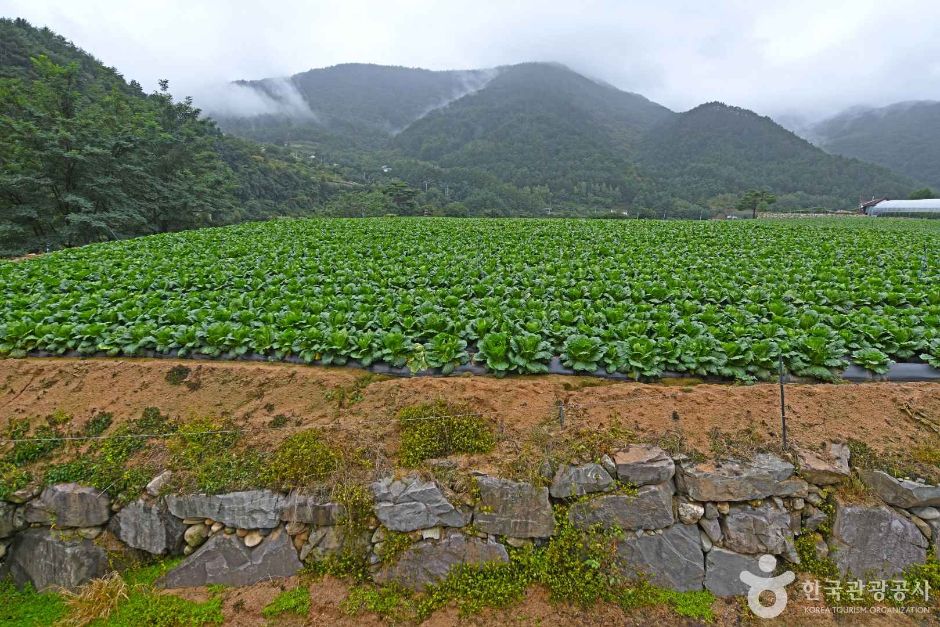
According to the Joseon Treasure Survey research, various stone structures once existed here, including one three-story stone pagoda, two standing stone Buddhas, one seated stone Buddha, and one flagpole support. However, tragically, these precious artifacts suffered the pain of being lost amidst the bombardments of the 6·25 Korean War. The one stone pagoda that remains today was also destroyed during the war and partially restored by local residents who collected its components. It shows a style similar to the three-story stone pagoda of Gangneung Sinboksa Temple Site, offering a glimpse into the Buddhist architectural style of the Gangwon region at that time.
List of Lost Artifacts (Joseon Treasure Survey Research Records)
- One three-story stone pagoda (the one remaining today is also a partial restoration of what was toppled during the war)
- Two standing stone Buddhas (Lost during the 6·25 Korean War)
- One seated stone Buddha (Lost during the 6·25 Korean War)
- One flagpole support (Lost during the 6·25 Korean War)
- Some stone structures of the pagoda (Lost during the 6·25 Korean War)
A Breathing Connection in Samguk Yusa: Sudasa and Woljeongsa
introduces after Jajang the monks who resided at Woljeongsa, mentioning Sinhyo Geosa, Beomil Munin Sini, and Sudasa Elder Yuyeon. This suggests that Sudasa was a temple that had close exchanges with Woljeongsa at the time and played an important role in Buddhist history. While walking through the tranquil Pyeongchang Suhang-ri Temple Site, how about imagining the wisdom and footsteps of the monks from a thousand years ago?
Pyeongchang Suhang-ri Temple Site, How to Get There?
Sudasa Temple Site, holding the deep history of Pyeongchang, Gangwon-do, it’s now time to visit the actual site. When using public transportation, you can take rural buses from the Pyeongchang-gun seat, and if using a private car, you can conveniently find it using navigation. The area around the historical site is relatively quiet, so it’s recommended to visit with a relaxed mind.
Wise Steps for Visitors
Here are some tips to make your visit to Pyeongchang Suhang-ri Temple Site, where a millennium of history breathes, even more meaningful.
- Comfortable Attire The historical site is outdoors, and the terrain may be uneven, so it’s advisable to prepare comfortable shoes and clothing for walking.
- Prior Research Before visiting, researching materials related to Sudasa will allow for a deeper understanding of the site and a more immersive experience.
- Connecting with Nearby Attractions Pyeongchang is a place with beautiful natural scenery and many other historical sites and attractions. Plan a course to explore other attractions in Pyeongchang along with Sudasa Temple Site.
- Protecting Nature and Relics To ensure that precious cultural heritage is well preserved, it requires civic awareness to be quiet within the site and use the surrounding environment cleanly.
A Journey to Find Lost Time
Pyeongchang Suhang-ri Temple Site is not just a mere temple site. It is a history forgotten for centuries and then rediscovered, and the voice of the past that constantly poses questions to us. Here, once glorious but now nestled in a quiet forest, we can simultaneously feel the flow of time and the weight of history. If you wish to encounter a millennium of lost time in the tranquil forests of Pyeongchang, Pyeongchang Suhang-ri Temple Site awaits you.
Frequently Asked Questions
Q1. What kind of place is Pyeongchang Suhang-ri Temple Site?
This place, long known only as ‘Suhang-ri Temple Site’, is an ancient temple site in Pyeongchang, Gangwon-do, which was revealed through the excavation of artifacts in 1983 to be Sudasa Temple Site (水多寺址) as recorded in .
Q2. Until when is Sudasa Temple Site presumed to have existed?
Although recorded in , it does not appear from onwards, suggesting that it was a temple that existed until approximately the 15th century.
Q3. What artifacts remain at Pyeongchang Suhang-ri Temple Site today?
One stone pagoda with some missing components and the cornerstones of a building site remain. The remaining stone pagoda was restored after being destroyed during the 6·25 Korean War and is similar in style to the three-story stone pagoda of Gangneung Sinboksa Temple Site.
Q4. What other artifacts existed in the past?
According to the Joseon Treasure Survey research, along with one three-story stone pagoda, there were also two standing stone Buddhas, one seated stone Buddha, one flagpole support, and stone structures of the pagoda, but most were lost during the 6·25 Korean War.
Q5. What is the background for Sudasa being mentioned in ?
introduces the monks who resided at Woljeongsa after Jajang, mentioning Sinhyo Geosa, Beomil Munin Sini, and Sudasa Elder Yuyeon, suggesting a connection with Woljeongsa.